Engineering
Railway Track Fasteners for
Stronger, Safer Tracks
Rahee, a leader in railway track fasteners and track fittings and fastenings, has over 60 years of experience. Specializing in bridge fastening, Rahee's innovative Zero Restraint Fastening System (ZRF) for steel bridge sleepers is used on prestigious projects like the Chenab Bridge and Bogibeel Bridge. Rahee offers high tensile bolts and nuts, rail screw spikes, ZRF for bridges, elastic rail clips, and rail pads. Their engineering expertise ensures the development of new and customized systems quickly and efficiently.
Rahee specializes in manufacturing steel track sleepers for various applications, including standard tracks, turnouts, and bridges. Ideal for railway tracks over bridges where a resilient ballast bed isn't feasible, Rahee's steel track sleepers, made from steel channels or H-beams, are durable and often galvanized for longevity. H-beam track sleepers are designed to handle dynamic train loads and feature canted bearing plates with elastic fastening systems. Steel channel track sleepers, fabricated from welded sections, accommodate both running and guard rails, with rubber pads to absorb shocks and vibrations. Lightweight and cost-effective, Rahee's steel track sleepers offer a modern solution for rail networks with medium to heavy axle loads.
Trendsetters
Innovators in
Rail Fastening SOLUTIONS
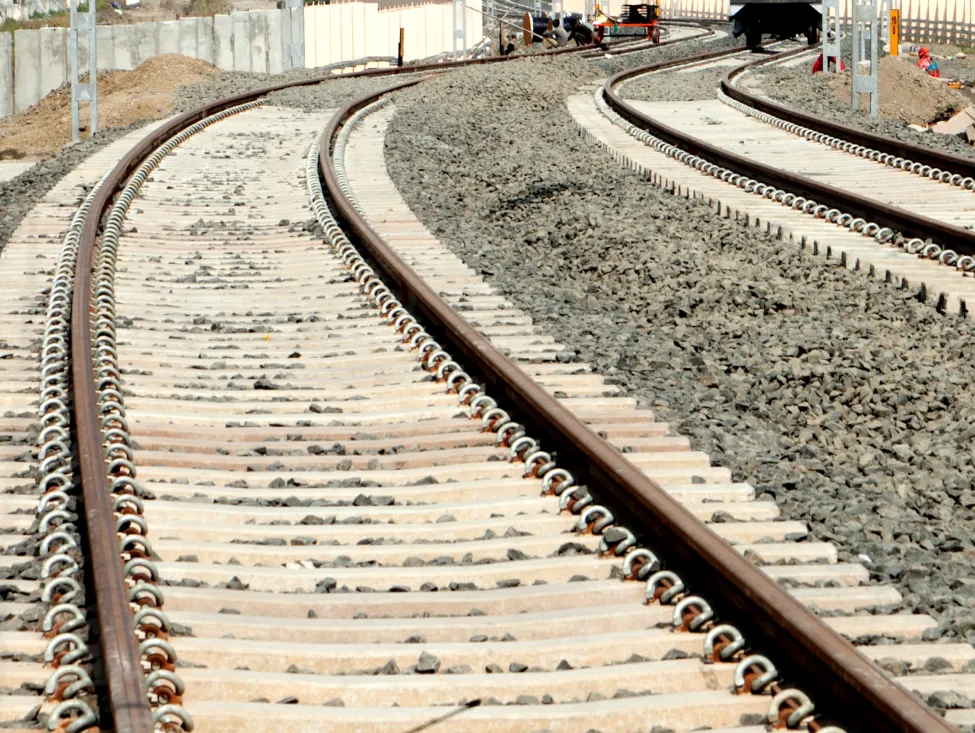
Rahee has been a key player in railway track fasteners for 75 years, continually pushing the boundaries of innovation. Rahee is also a leader in bridge fastening solutions in India. Their unique Zero Restraint Fastening System (ZRF) for steel bridge sleepers addresses the limitations of traditional systems. This innovative solution is used in notable projects like the Chenab Bridge, the world's highest rail bridge, and the Bogibeel Bridge in Northeast India.
Rahee's product range includes:
- High Tensile Bolts & Nuts
- Rail Screw Spikes
- Zero Restraint Fastening System for Bridges
- Elastic Rail Clips
- Rail Pads
With a focus on quality and innovation, Rahee remains a trusted name in railway track fasteners and track fittings and fastenings.
Robust Steel Sleepers
for Track Applications
Rahee manufactures steel sleepers for various track applications including :
- Steel Sleepers for Standard Track
- Steel Sleepers for Turnouts
- Steel Sleepers for Bridges
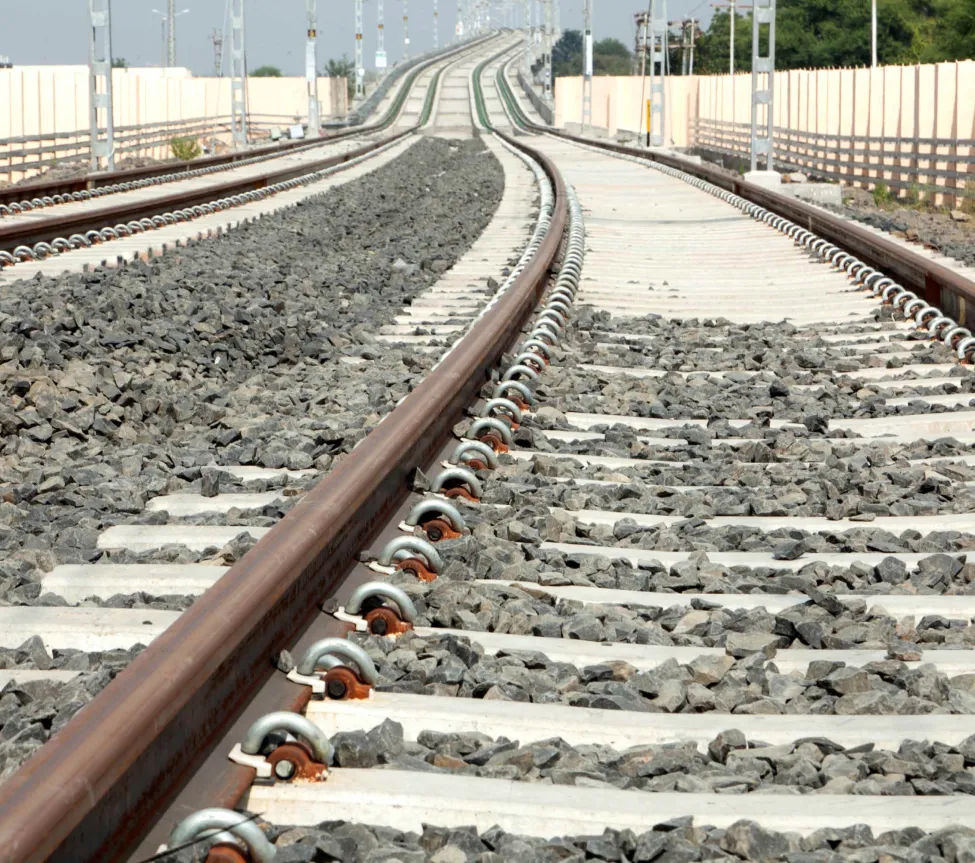
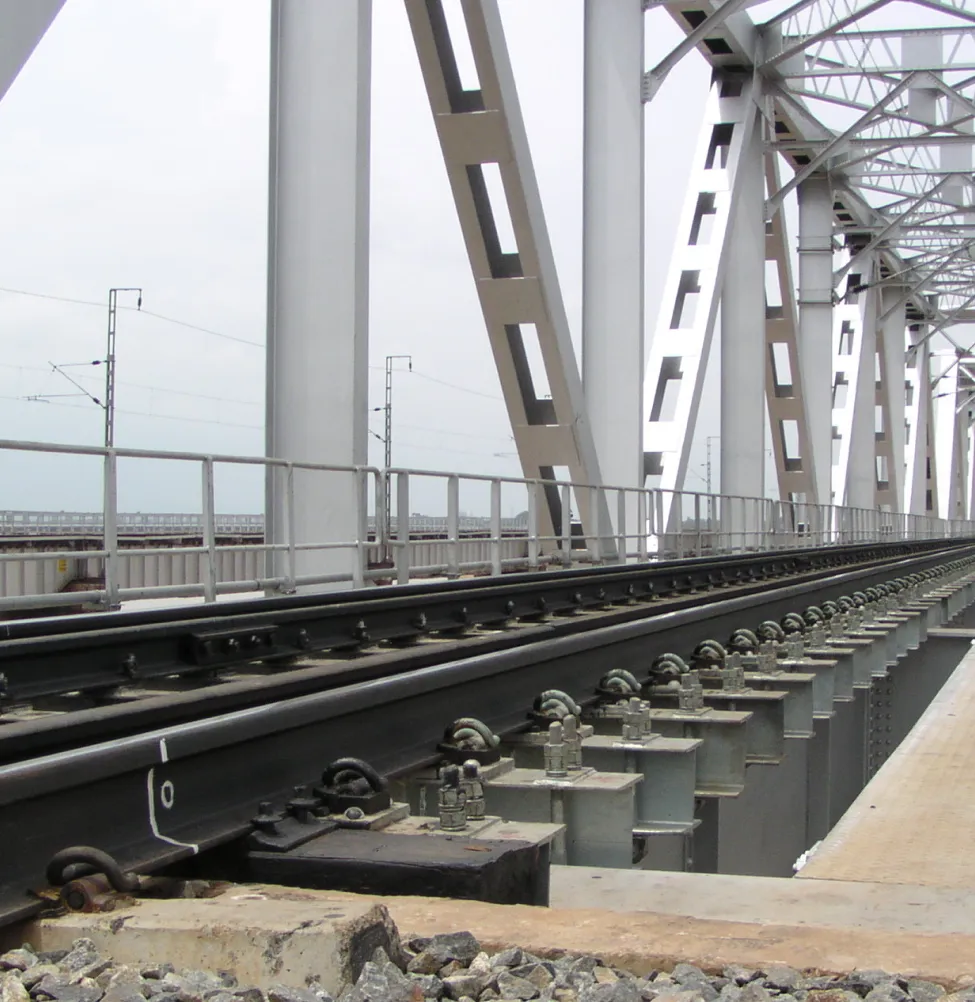
Steel sleepers are widely used in the railway tracks running over bridges where a resilient ballast bed cannot be created. Steel Sleepers for Bridges are manufactured using either Steel Channels or H-beam steel section. The sleepers are usually supplied galvanized or metallized to deliver effective service life on bridges. Steel Sleeper over bridges are a much more robust and effective solution as compared to wooden sleepers.
H-beam Steel Sleeper
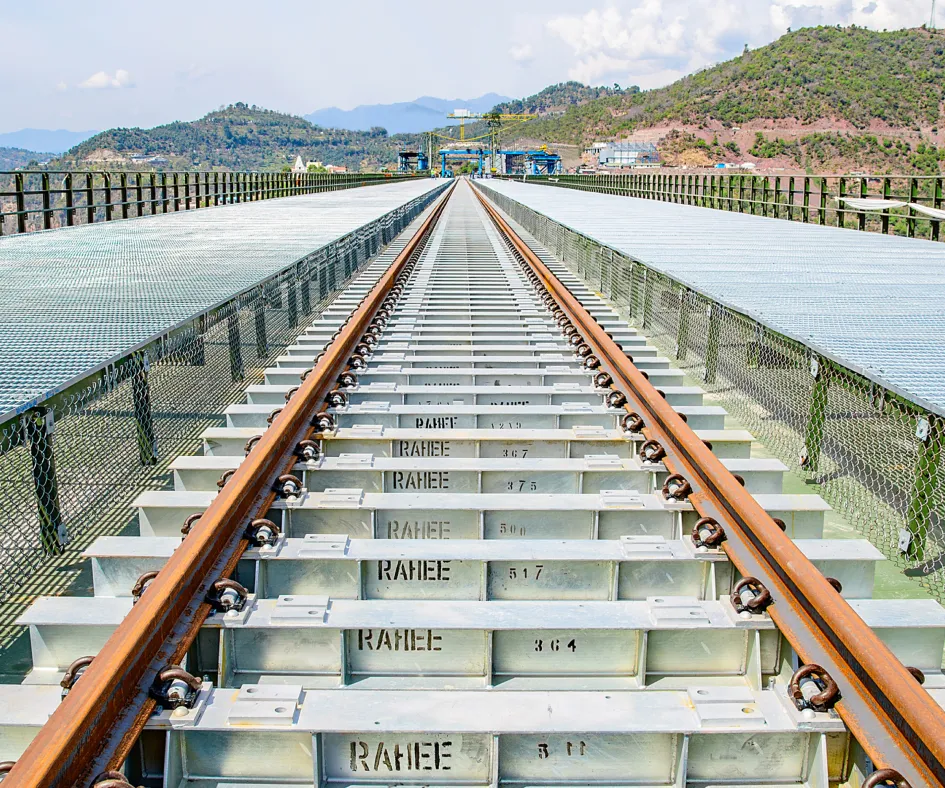
H-beam sleepers have a sturdy structure and precise dimensions, making them perfect for bridge tracks. They are made to withstand the dynamic stresses of trains on non-ballasted open deck steel girder bridges. They are made of a single rolled H-beam section with canted bearing plates, and the rails are fastened with an elastic system. In order to prevent rail creep or thermal expansion stresses from being transferred to the girders, Rahee's Zero Restraint Fastening System (ZRF) on H-beam sleepers eliminates the need for additional maintenance tools. Long welded tracks on bridges are possible with this system, which may be tailored to the needs of the client with options for zero load or full load fastening.
Steel Channel Sleeper
Railway tracks that cross bridges are intended to use steel channel sleepers in situations where a resilient ballast bed is not an option. Steel channel sections are used to make steel channel sleepers. To achieve the necessary strength, two channels are welded together. The channel sleeper can contain guard rails in addition to running rails. A clip-and-bolt rail fastening method is used to secure the running rails to the canted bearing plate. On the other hand, the guard rails are fastened to the sleepers directly. To reduce vibrations and absorb shocks, rubber pads are also placed beneath each sleeper and rail. To extend the product's lifespan, hot dip galvanise all steel fittings and steel channel sleepers.
Steel Sleeper for Standard Track
Standard railway tracks and turnouts subjected to medium or heavy axle loads are equipped with steel sleepers. Compared to wooden or concrete ones, they are more exact in terms of dimensions and lightweight. Their many benefits—among them being less expensive than timber sleepers—make them a practical technological choice for contemporary rail networks. A variety of steel sleeper configurations, including ones for greater axle loads and faster speeds, are available from Rahee.
FAQ
Frequently Asked Questions